
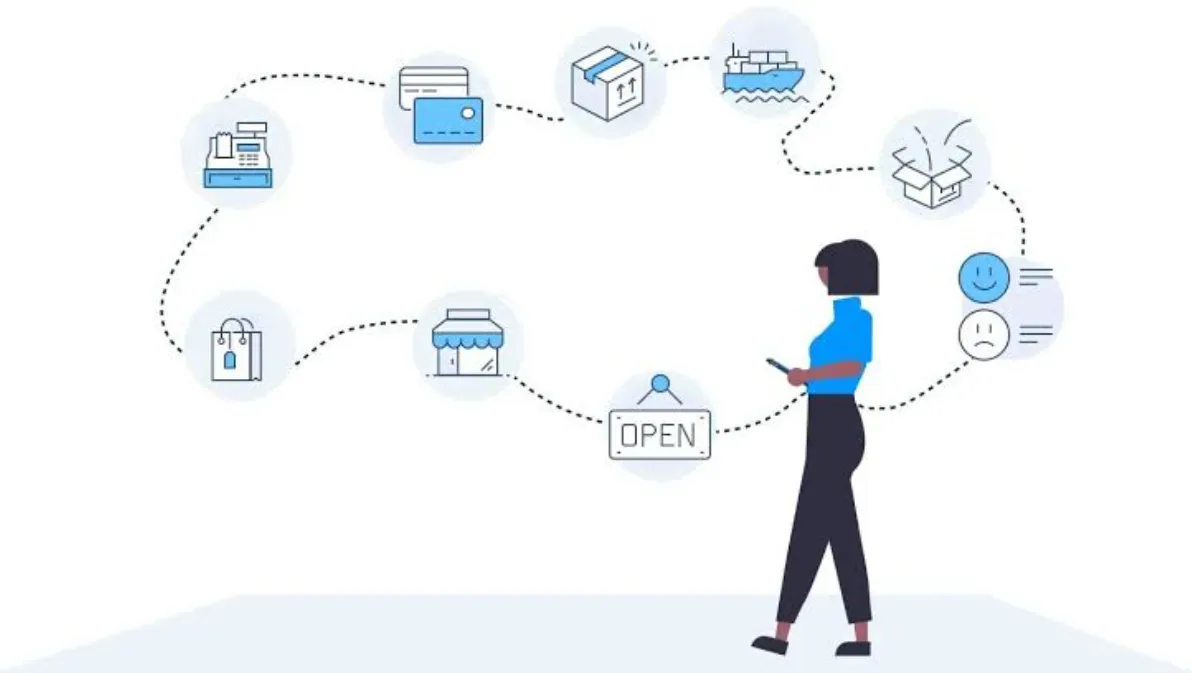
A customer who has one bad experience with a brand does not usually complain and give a second chance. In Australia, 94 percent of them just leave, quietly, and go to a competitor instead. That kind of exit does not show up as an angry email. It shows up months later as a slow decline in revenue nobody can quite explain.
Fixing that requires more than a better chatbot or a nicer hold-music track. It requires people who actually understand how every touchpoint connects to every other touchpoint, which is exactly the work of Probe CX’s customer experience transformation experts, building customer journeys that hold together instead of falling apart the moment something goes slightly wrong.
A Journey Is Not Just a Diagram on a Wall
Most businesses have a customer journey map somewhere, usually a colorful diagram in a slide deck that nobody has updated in two years. The problem is that a real customer journey is not a static picture, it is a living thing that changes every time a business adds a new channel, a new product, or a new support tool.
Seventy percent of customers now expect anyone they interact with to already have full context about their situation, no matter which channel they use to reach out. That expectation does not care whether a company’s departments talk to each other internally. If the systems are not actually connected behind the scenes, the customer feels that disconnection immediately, and it reads as the company simply not caring.
Why Connection Beats Speed Alone
Speed matters, but connection matters more. A fast response that ignores everything a customer already told a different department last week does not feel like good service, it feels like starting over from zero every single time. Sixty-four percent of customers say they will spend more money with a business that resolves their issue wherever they already are, without forcing them to repeat themselves or switch channels mid-conversation.
Building that kind of connected experience takes real technical work behind the scenes, tying together data from support, sales, billing, and marketing so an agent or an AI system can see the full picture instantly instead of piecing it together from scratch on every call.
The Human and Digital Balance Nobody Gets Right on the First Try
Ninety-five percent of customer interactions are expected to involve AI in some form this year, according to industry projections. That number can sound alarming if you assume it means humans are disappearing from customer service entirely. They are not. It means AI is handling more of the routine, predictable work so people can spend their time on the conversations that actually need judgment and empathy.
Getting that balance right is genuinely difficult, and it is where a lot of businesses stumble, either over-automating and frustrating customers who need real help, or under-automating and drowning their support teams in repetitive tickets that a well-built system could have resolved instantly.
Data Ownership Is the New Competitive Edge
As reliance on third-party data keeps shrinking, first-party customer data, the information a business collects directly through its own interactions, has become the real advantage separating strong customer experiences from mediocre ones. Companies that own and properly use their own customer data can personalize experiences in ways competitors relying on generic third-party sources simply cannot match.
This connects directly back to building connected journeys, since a business cannot personalize an experience it does not actually understand. Every disconnected system, every siloed department holding onto its own slice of customer information, is a missed opportunity to make the next interaction feel personal instead of generic.
What This Looks Like When It Actually Works
A customer contacts support about a billing question, and the agent already knows they called last week about a shipping delay, already knows their loyalty tier, and already knows the resolution they were promised. No repeating the story. No transferring three times. That is not a lucky coincidence, that is the result of deliberate architecture built by people who specialize in exactly this kind of connected system design.
Customer-obsessed organizations that get this right grow revenue about 41 percent faster than their competitors and keep 51 percent more of their customers over time. Those numbers exist because customers can feel the difference between a business that has genuinely connected its journey and one that is still stitching things together with tape and hope. The gap between those two kinds of companies is only going to keep growing.

Sharing heartfelt prayers, blessings, faith-filled quotes, messages, and wishes to spread hope, positivity, and God’s love every day.