
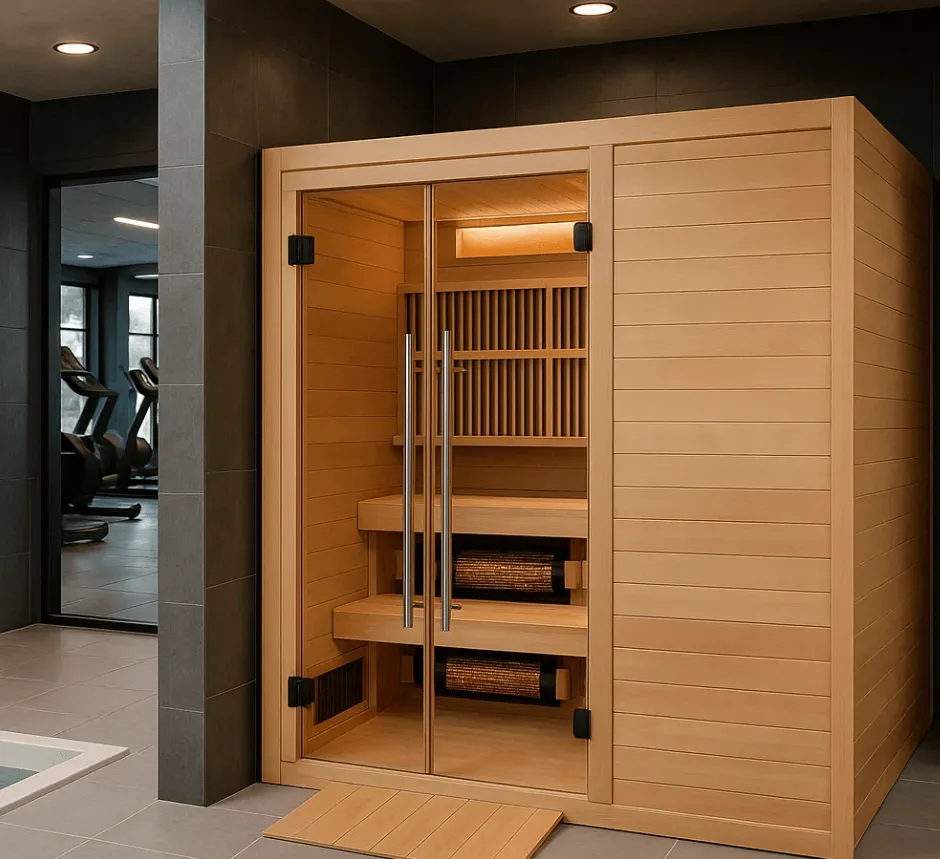
A king-size home sauna is one of the larger wellness investments most people make – and like any significant purchase, the price tag deserves a clear explanation rather than a marketing spin. Understanding what drives king size home sauna price at each tier tells you where the money goes, which cost drivers are worth paying for, and – critically – which ones represent areas where cutting costs will cost you more in performance and longevity than you saved upfront.
King-size infrared saunas range from approximately two thousand five hundred dollars at the lower end to seven thousand dollars and above at the premium tier. That range reflects genuine differences in engineering, materials, and manufacturing quality – not just brand markup. A buyer who understands what each price tier actually includes is far better positioned to make a decision they will be satisfied with two years into ownership than one who selects based on list price or surface features alone.
The Five Cost Drivers in a King-Size Infrared Sauna
Five primary variables determine where a king-size sauna falls on the price spectrum: panel quality and count, wood species and construction method, electrical components and control system sophistication, smart feature integration, and after-sale support infrastructure. Each of these has a meaningful cost associated with doing it well – and each represents an area where manufacturers make trade-offs that directly affect long-term ownership experience.
Panel quality is the most significant cost driver because heating panels are both the functional core of the product and the component most subject to degradation over time. High-grade carbon fiber panels manufactured to tight consistency specifications cost significantly more than the lower-grade alternatives used in budget units. That cost is reflected directly in the purchase price – and in how the sauna performs and maintains its performance across years of daily use.
What the Lower Price Tier Typically Reflects
King-size saunas priced between two thousand five hundred and three thousand five hundred dollars are not necessarily poor products – but they consistently involve trade-offs in one or more of the core cost drivers. Panel grade is the most common area of compromise: lower-cost panels may perform adequately in the first year but tend to lose output consistency over time, producing sessions that feel less effective without producing any obvious diagnostic signal that the panels are underperforming.
Wood species and construction quality are the second most common area of compromise in the lower price tier. Engineered wood composites or lower-grade solid wood species that off-gas more at elevated temperatures, warp under repeated heat cycling, or require adhesive bonding to compensate for imprecise joinery all appear more frequently in units priced at the lower end. The cabin may look comparable to a premium unit in product photos but perform differently after 18 to 24 months of regular heat exposure.
The Mid-Tier Price Range and What It Delivers
King-size saunas in the three thousand five hundred to five thousand dollar range typically deliver quality carbon fiber or ceramic panels, premium wood species such as hemlock or cedar with proper tongue-and-groove joinery, and robust electrical systems with reliable digital controls. This is the tier where the engineering quality generally matches the marketing claims, and where buyers with realistic daily use expectations will find the best balance of investment and long-term value.
Mid-tier units may offer smart connectivity as an option or include it at the base level, but often with less sophisticated app platforms than premium units. Warranty terms in this tier are typically three to five years on panels and electrical components – a reasonable signal of manufacturer confidence in product longevity. Customer support quality varies more in the mid-tier than in the premium tier, so testing responsiveness before purchase remains important regardless of price point.
Premium Tier Pricing and What Sets It Apart
Premium king-size saunas priced above five thousand dollars are typically distinguished by full-spectrum panel technology with verified low-EMF output, ultra-premium wood species with precision joinery, sophisticated smart control platforms with robust health app integration, and after-sale support infrastructure that includes domestic parts inventory and knowledgeable technical teams. These are products built to perform for a decade or more at daily use frequencies, backed by manufacturers confident enough in their engineering to warrant them accordingly.
The premium tier also often includes acoustic isolation, integrated sound systems with quality speaker placement, multi-zone chromotherapy coverage, and sauna accessories – bench covers, backrests, towel hooks, hygrometers – that are either included in the base configuration or available from the same brand. The complete ecosystem approach that premium brands take means less sourcing friction for buyers who want every component working together rather than assembling a system from disparate sources.
Where You Should Never Compromise on Price
Regardless of which price tier fits your budget, two areas should never be where you accept meaningful compromise: safety certifications and panel EMF specifications. A king-size infrared sauna without third-party safety certification – ETL, UL, CE, or equivalent – is an unacceptable risk in a high-power home appliance used daily in an enclosed space. If a unit at your target price point does not carry recognized safety certification, do not purchase it. The risk is not worth the saving.
Panel EMF specifications matter because this is a product you will use daily, often for 30 to 45 minutes per session, in close proximity to multiple heating panels. The cumulative EMF exposure across hundreds of annual sessions is a meaningful long-term consideration. Look for specific EMF measurement data – not just a low-EMF label – and verify that measurements were taken at real operating temperatures. Brands that invest in low-EMF engineering are transparent about their measurements; brands that do not tend to be vague.
Calculating Long-Term Cost Beyond the Purchase Price
The true cost of a king-size infrared sauna extends beyond the purchase price to include energy costs over the ownership period, any maintenance or repair expenses, and the opportunity cost of replacing an underperforming unit early. A five-thousand-dollar unit used for eight years at minimal maintenance cost has a total ownership cost profile that often compares favorably to a three-thousand-dollar unit that requires panel replacement or significant repairs at year three or four.
Energy costs for a king-size sauna are relatively consistent across quality tiers for units of similar wattage, but insulation quality affects how efficiently the unit reaches and maintains temperature. Premium units with better insulation cores consume less energy per session to maintain their target temperature, producing meaningful savings over a high-frequency multi-year use pattern. Calculate estimated annual energy costs as part of your total cost comparison, not just the upfront price.
Getting the Most From Your Budget at Any Tier
If your budget sits firmly in the mid-tier range, maximize value by prioritizing panel quality and safety certifications above smart features and aesthetic upgrades. A sauna with excellent panels and solid wood construction that lacks app connectivity will outperform a smart-enabled unit with mediocre panels every session for every year of ownership. Smart features can be added or workarounds found; panel quality cannot be upgraded after purchase.
Request itemized specifications from any brand you are seriously evaluating: panel grade, wattage per panel, total wattage, wood species, joinery method, EMF measurements, and warranty terms by component. The brands whose price reflects genuine engineering quality will answer all of these questions confidently and specifically. The ones whose pricing reflects marketing investment rather than manufacturing quality will respond with generalities. That distinction alone tells you most of what you need to know about where your money is going.
For buyers who want pricing transparency backed by genuine engineering accountability, Dialed Labs provides king-size infrared saunas with specifications that hold up to scrutiny – built with premium panels, quality wood construction, and after-sale support designed for the long-term ownership relationship that a significant home wellness investment deserves.
Frequently Asked Questions
What is the average price of a quality king-size home infrared sauna?
Quality king-size home infrared saunas from reputable brands typically range from three thousand five hundred to six thousand dollars, with premium full-spectrum or smart-enabled models extending above that range. Units below three thousand dollars in a king size almost always involve meaningful compromises in panel grade, wood construction, or safety certifications. The mid-to-upper end of this range is where engineering quality and long-term value most consistently converge.
Are there financing options available for king-size sauna purchases?
Many premium sauna brands and wellness retailers offer financing options ranging from 0 percent promotional APR periods to installment payment plans through third-party financing providers. Financing availability and terms vary by brand and retailer, so confirm options directly with the seller before purchase. For a significant wellness investment that will be used daily, financing that spreads the cost over 12 to 24 months is a practical option many buyers use to access premium quality within their monthly budget.
Does a higher sauna price always mean better infrared therapy results?
Higher price does not automatically guarantee better infrared therapy results, but it does correlate with the construction quality and panel consistency that produce better results over multi-year ownership. A mid-tier unit with excellent panels from a reputable brand can outperform an overpriced unit with mediocre panels from a brand investing more in marketing than manufacturing. Focus on verifiable specifications rather than price alone as the primary quality indicator.
What upgrades are worth paying extra for in a king-size sauna?
The upgrades most consistently worth additional cost in a king-size sauna are full-spectrum panel coverage if you have specific interest in near-infrared photobiomodulation benefits, smart app control if you will genuinely use remote preheat and session tracking features regularly, and extended warranty coverage on panels and electrical components. Premium wood species are worth the additional cost for longevity and in-session air quality. Cosmetic upgrades like exterior finishes or premium handle hardware are the least impactful cost additions.
How does delivery cost factor into the total price of a king-size sauna? Freight delivery for a king-size infrared sauna typically adds one hundred fifty to four hundred dollars to the total purchase cost depending on distance from the warehouse, delivery type selected, and whether white-glove service is included. Some brands include standard curbside freight delivery in their advertised price; others list it separately. Confirm whether delivery is included before finalizing price comparisons between brands, as a lower base price with separate delivery charges may net out comparably

Sharing heartfelt prayers, blessings, faith-filled quotes, messages, and wishes to spread hope, positivity, and God’s love every day.